
Artificial intelligence can generate images and visual compositions in seconds, but Arabic script remains a harder test. Arabic letters do not behave as isolated shapes. Their forms change by position, connect across a word, and carry linguistic and aesthetic relationships that a visually convincing image can still get wrong.
In brief
- AI can accelerate visual exploration, but it does not remove the need for human review.
- Letter connections, order, diacritics, and legibility must be checked before a result is used.
- ArabicDesign.ai provides a focused environment for testing Arabic text across several calligraphic and visual directions.
What is Arabic calligraphy AI software?
The term describes tools that accept Arabic text and use artificial intelligence to turn it into visual concepts or calligraphic compositions that can be compared and developed. Tools vary considerably in Arabic-language support, letter accuracy, available styles, editing controls, and export options.
The most responsible use is during exploration: generate several directions quickly, then review the language and visual structure before adopting anything in a finished project.
Why is Arabic script difficult for AI?
Correct Arabic is more than a recognisable silhouette. Letters must connect properly, words must remain readable, and the composition must preserve rhythm and balance without changing the intended text.
- Incorrect letter connections.
- Missing letters or invented shapes.
- Errors in letter order or diacritics.
- Poor legibility in classical styles.
- A beautiful composition that is linguistically wrong.
- Weak balance or disregard for calligraphic structure.
For that reason, generated work should be treated as a proposal to review, not as a production-ready result in every situation.
What is ArabicDesign.ai?
ArabicDesign.ai is a specialised platform for AI-assisted Arabic calligraphy and design. It was developed to help designers, content creators, and people interested in Arabic letterforms explore visual ideas more quickly in an environment focused on the script itself.
The platform is not intended to replace a calligrapher or designer. Its role is to support experimentation and widen the range of directions available before refinement and final approval.
How does the process work?
- Enter the Arabic text you want to explore.
- Select a calligraphic style or visual direction.
- Generate several proposals for comparison.
- Check the letters and words, then choose the closest result.
- Adjust colour or treatment when needed.
- Download the work and use it as a design starting point.
Available styles
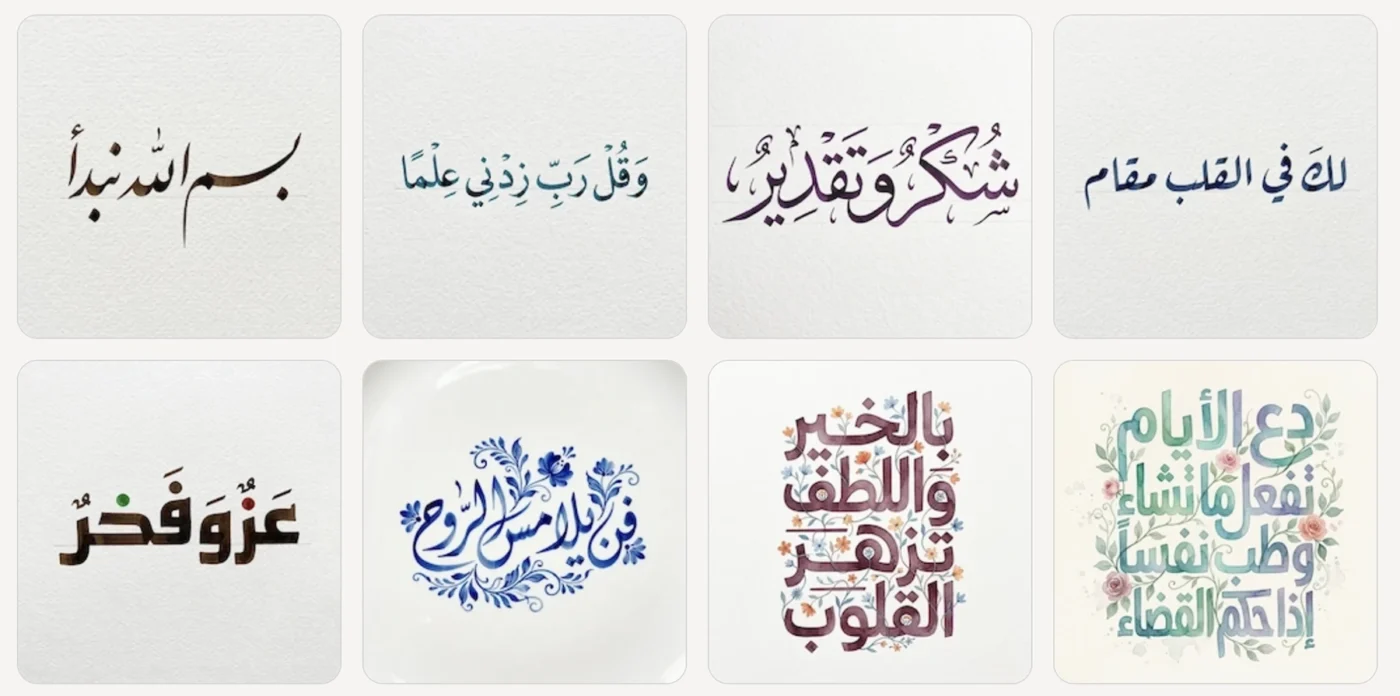
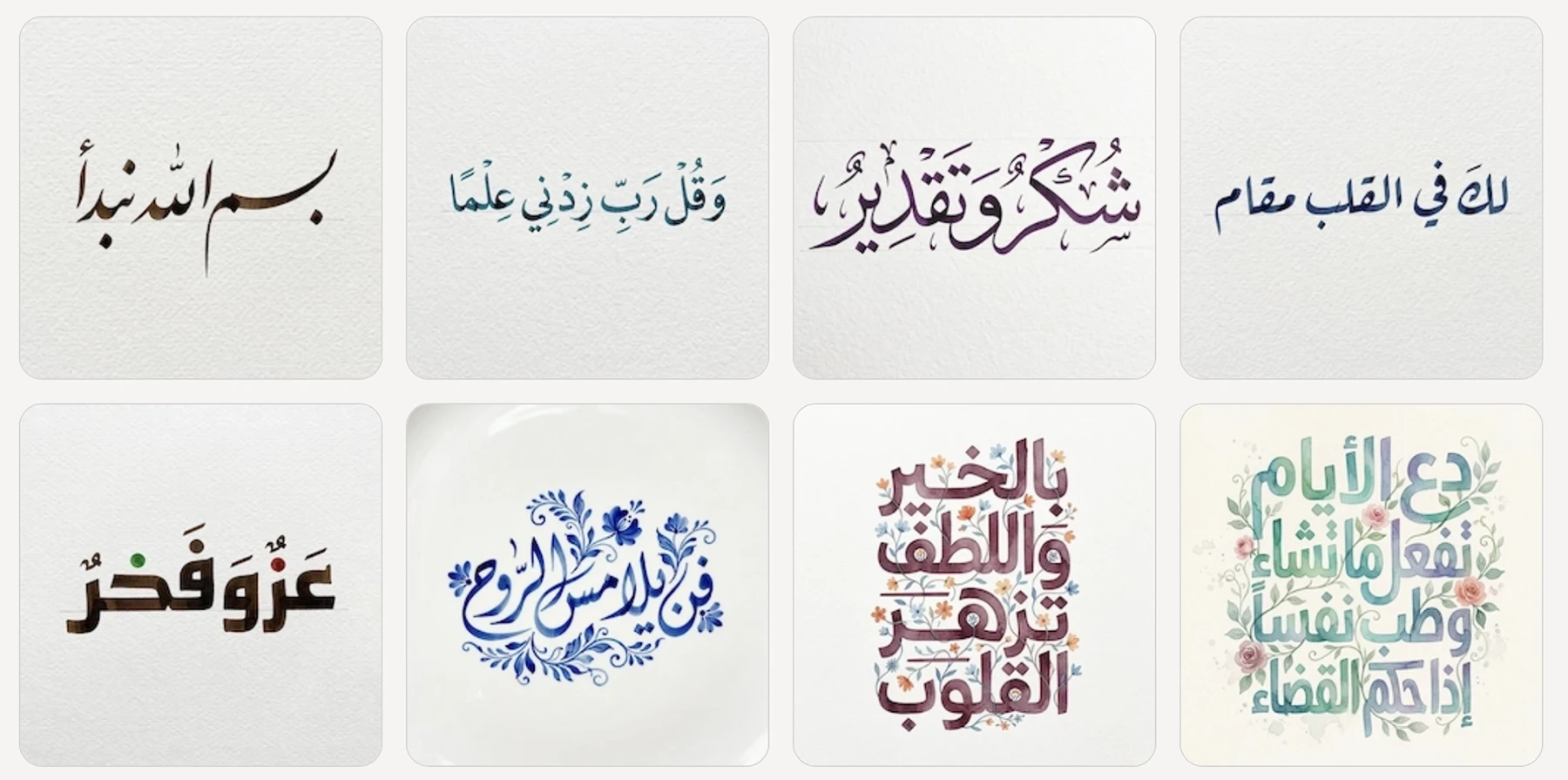
The platform lets users test the same phrase through a range of calligraphic and design directions before deciding which approach deserves further development.
Naskh · Ruqaa · Diwani · Thuluth · Kufic · Modern and contemporary Arabic styles
Practical uses
Arabic logo exploration
Explore early ideas based on Arabic letters before moving into logo construction and refinement.
Digital content
Test headline treatments and visual directions for social posts and other digital material.
Cultural projects
Explore text and quotations through traditional or contemporary visual approaches.
Presentations and learning material
Develop early directions for Arabic titles with stronger clarity and visual presence.
See the platform in action
The video demonstrates the first release, from entering text and choosing a style to comparing results and downloading a design.
A tool for exploration, not a substitute for expertise
The value of these tools lies in shortening the exploration stage and revealing directions that may not appear in the first attempt. Linguistic accuracy, composition quality, and cultural or brand suitability still require an experienced human eye.
Explore ArabicDesign.ai